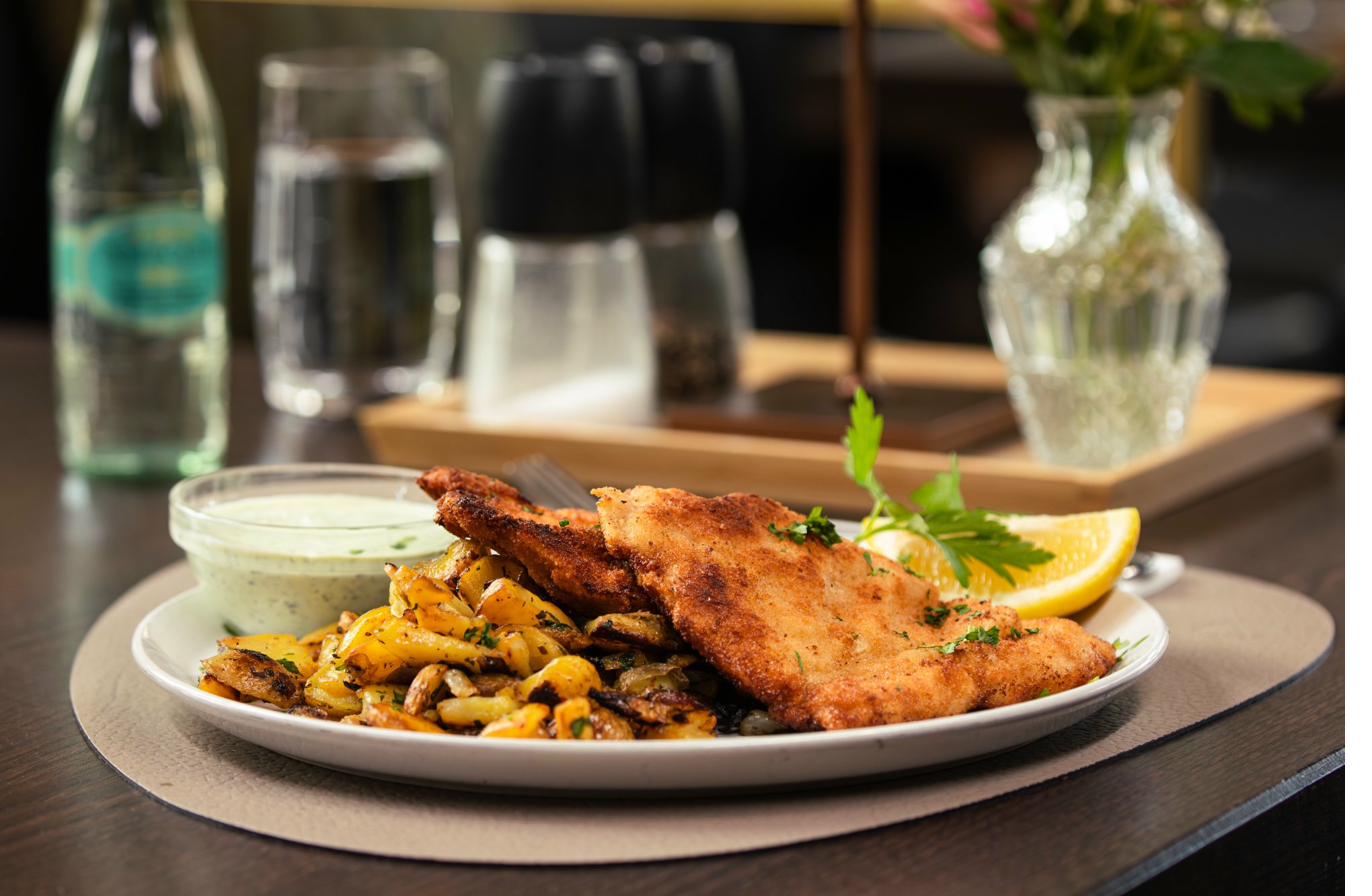
Few dishes are as universally beloved in Germany as the schnitzel. Whether served as a classic Wiener Schnitzel made from veal, a Jägerschnitzel with mushroom cream sauce, or a Frankfurt Schnitzel with the famous Green Sauce – the breaded cutlet is deeply woven into German culinary culture. But where did the schnitzel actually originate, what varieties exist, and what makes a truly great one?
The History of the Schnitzel
The origins of the breaded cutlet reach far back in time. As early as the Middle Ages, it was common in wealthy households to coat pieces of meat in breadcrumbs before frying them. The golden breading was not only meant to enhance flavour but also served as a sign of wealth – gold leaf on food was widespread among the aristocracy at the time, and the golden-brown coating represented a more affordable alternative.
The most famous variety, the Wiener Schnitzel, has its origins – as the name reveals – in the Austrian capital. Legend has it that Field Marshal Radetzky brought the recipe from Milan to Vienna in the mid-19th century, where the „Cotoletta alla milanese" had been known for centuries. Historians debate the accuracy of this story, but what is certain is that the breaded veal cutlet had risen to the status of Austria's national dish by the 19th century, from where it began its triumphant journey across all of Europe.
What Makes a Great Schnitzel?
The quality of a schnitzel comes down to a few crucial factors. First, the meat: a genuine Wiener Schnitzel is cut from the top round of the veal. It should be pounded evenly thin – about four to five millimetres – so that it cooks uniformly and the breading becomes crispy without the meat drying out.
The breading follows the classic three-step process: flour, beaten egg and breadcrumbs. The key is that the coating sits loosely rather than being pressed tightly against the meat. When fried in sufficiently hot clarified butter – the schnitzel should essentially float – small air pockets form between the meat and the crust. These bubbles create the characteristic wavy, golden-brown texture that crackles beautifully when you cut into it.
The frying temperature also plays a central role. Oil that is too hot burns the breading before the meat is cooked through. Temperatures that are too low cause the schnitzel to absorb excess fat. The ideal temperature is around 170°C – at that heat, a thinly pounded schnitzel needs only about two to three minutes per side.
The Most Popular Schnitzel Varieties
Wiener Schnitzel
The undisputed classic: thinly pounded veal, breaded and fried to a golden brown in clarified butter. It is traditionally served with lingonberry jam, a squeeze of lemon and potato salad or fried potatoes. An important distinction: only when veal is used may it be called „Wiener Schnitzel". When pork is used, it must correctly be labelled „Schnitzel Wiener Art" (Viennese-style schnitzel).
Jägerschnitzel
The Jägerschnitzel (hunter's schnitzel) is perhaps the most popular variety in German restaurants. A hearty mushroom cream sauce accompanies the breaded base – usually made from button mushrooms, onions and cream. In some regions, wild mushrooms such as chanterelles or porcini are used, giving the dish a particularly aromatic character. It pairs beautifully with fried potatoes or Spätzle.
Frankfurt Schnitzel
A regional speciality from the Rhine-Main area and the state of Hesse: the Frankfurt Schnitzel is served with the famous Frankfurter Grüne Soße (Green Sauce) – a cold herb sauce made from seven herbs (borage, chervil, cress, parsley, salad burnet, sorrel and chives), mixed with sour cream, yoghurt and hard-boiled eggs. The combination of crispy breading and the fresh, slightly tangy Green Sauce is unique and beloved far beyond the borders of Frankfurt. Particularly in Bad Homburg and the Hochtaunus district, the Frankfurt Schnitzel is a staple on many restaurant menus.
Pepper Schnitzel
The Pfefferschnitzel (pepper schnitzel) gets its distinctive character from a creamy green peppercorn sauce. The gentle heat of the pickled peppercorns harmonises beautifully with the mild flavour of the breaded meat. In upscale versions, the sauce is flambéed with a splash of cognac or brandy.
Chicken Schnitzel
As a lighter alternative to the classic pork or veal schnitzel, the chicken schnitzel has become firmly established. It is cut from the chicken breast, pounded thin and breaded in exactly the same way as its traditional counterpart. The milder flavour of the chicken makes it a versatile companion – from Gorgonzola sauce to lemon butter to Asian-inspired variations with sesame and soy sauce.
Schnitzel in Hesse and the Taunus Region
In the area around Frankfurt, Bad Homburg and the Taunus mountains, schnitzel holds a very special place. The proximity to Frankfurt makes the Frankfurt Schnitzel with Green Sauce the regional speciality that no restaurant menu would be complete without. The seven herbs for the Green Sauce are traditionally grown in the fields of Frankfurt's Oberrad district, and the season begins each year on Maundy Thursday.
At the same time, Hessian gastronomy is known for hearty, generous portions. A schnitzel that extends „beyond the plate rim" – so large that it hangs over the edge of the plate – is considered a point of honour in many traditional restaurants. It is typically accompanied by fried potatoes, which in Hesse are often prepared with bacon and onions.
"A great schnitzel doesn't need much – but the little it needs must be right: fresh meat, a loose breading and the right temperature when frying."
Eating Schnitzel in Bad Homburg
Bad Homburg vor der Höhe, the spa town on the southern slopes of the Taunus mountains, offers a diverse dining landscape. From traditional inns to upscale restaurants, schnitzel lovers will find numerous options here. The combination of Taunus nature and culinary tradition makes a restaurant visit in Bad Homburg particularly appealing – many establishments feature terraces with views of the surrounding greenery.
At Passions Restaurant, located at the Royal Homburger Golf Club, no fewer than five different schnitzel varieties are on the menu: the classic Wiener Schnitzel made from veal with lingonberry jam (€29.50), the Jägerschnitzel with mushroom cream sauce (€21.50), the pepper schnitzel with green peppercorn sauce (€21.50), the Frankfurt Schnitzel with homemade Green Sauce (€19.90) and the chicken schnitzel with Gorgonzola sauce (€19.90) – all served with crispy fried potatoes.
Schnitzel at Passions Restaurant
📍 An der Karlsbrücke 10, 61350 Bad Homburg (at the Royal Homburger Golf Club)
🕐 Tuesday – Sunday, 12:00 – 22:00 (kitchen until 9 pm)
Frequently Asked Questions About Schnitzel
What is the difference between Wiener Schnitzel and Schnitzel Wiener Art?
A genuine Wiener Schnitzel is made exclusively from veal. If pork is used instead, it must be labelled „Schnitzel Wiener Art" (Viennese-style schnitzel). The difference lies in the meat, not the preparation. Both are pounded thin, breaded and fried in clarified butter.
Why is the schnitzel swirled in the pan?
The swirling technique – known as „soufflieren" in German – ensures that hot fat repeatedly washes over the top of the schnitzel. This allows the breading to cook evenly and separate slightly from the meat, creating the characteristic wavy texture. This step is what distinguishes a handcrafted schnitzel from a deep-fried version.
What side dishes go best with schnitzel?
Classic accompaniments include fried potatoes, French fries or potato salad. In Hesse and the Rhine-Main area, fried potatoes with bacon are the most popular choice. Wiener Schnitzel is traditionally served with a squeeze of lemon and lingonberry jam. A fresh green salad rounds off the dish perfectly.
What are the seven herbs in Frankfurt Green Sauce?
The seven herbs are: borage, chervil, cress, parsley, salad burnet, sorrel and chives. They are finely chopped and blended with sour cream, yoghurt, vinegar, oil and hard-boiled eggs. The Green Sauce has been recognised as Hessian cultural heritage since 2016.